

PRIMe: The First Comprehensive Metric for Measuring the Effectiveness and Quality of Media Communication
How many articles were published about you is no longer enough. In PR, it's about what truly resonated and the impact the communication had on the brand. That's why the new metric PRIMe was created – a tool that evaluates media communication results comprehensively, understandably, and in real-time.
What if one front-page article carries more weight than ten marginal mentions? What if some outputs harm the brand more than they help? That's why we at Mediaboard developed PRIMe – the first comprehensive metric on the Czech market that measures media communication results in real-time, not only by quantity but mainly by impact on a specific brand.
Why was PRIMe created?
In PR, there has long been a lack of a tool that could measure the relevance and effectiveness of communication – without unnecessary complexities or distorted values.
The most commonly used was AVE – the so-called "advertising value equivalent," which says nothing about quality, context, or brand perception. An alternative was GRP, which is complicated to interpret. And advanced analyses? They were mostly time-consuming and expensive, available only to large companies.
PRIMe, on the other hand, offers a simple but data-accurate solution.
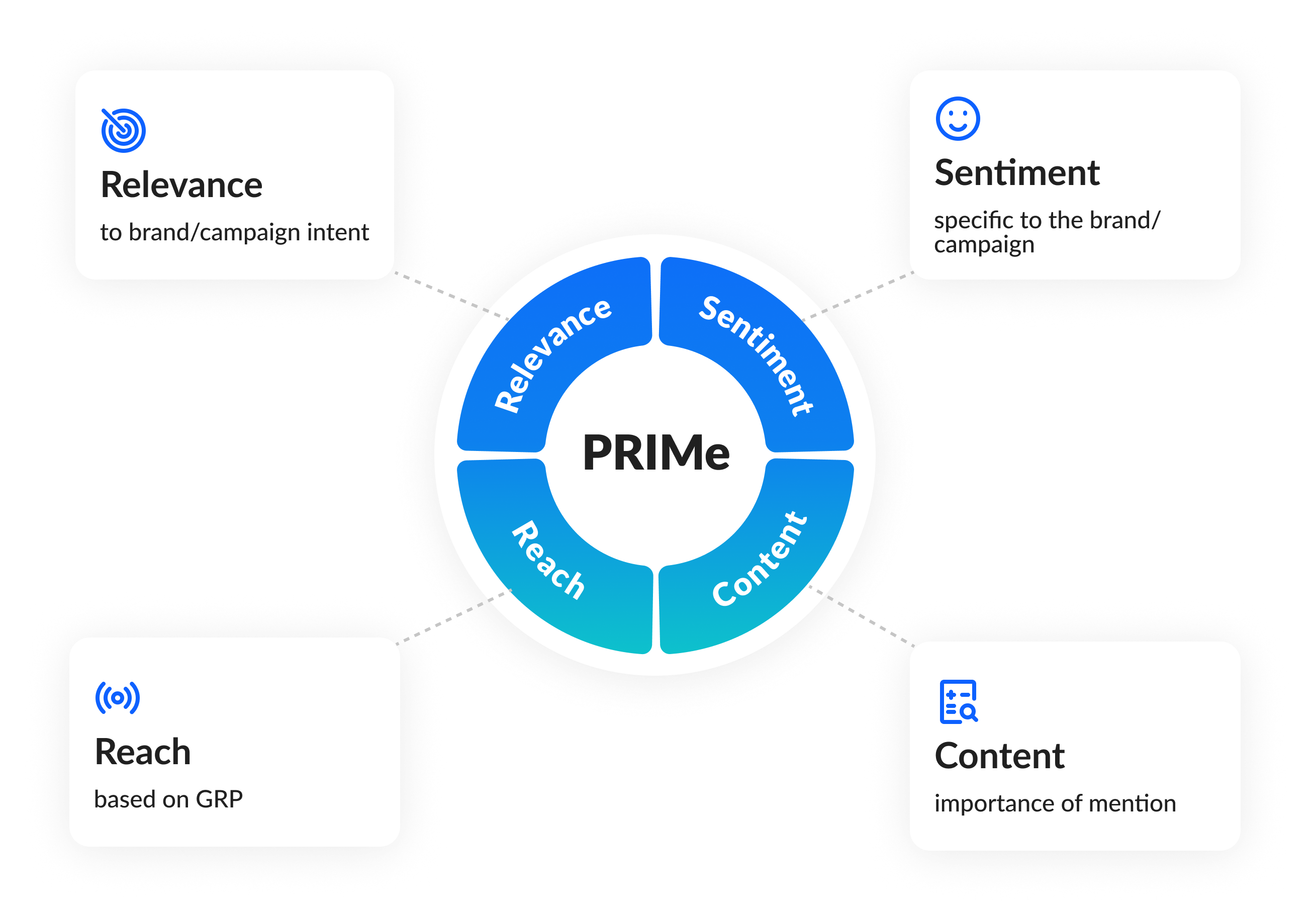
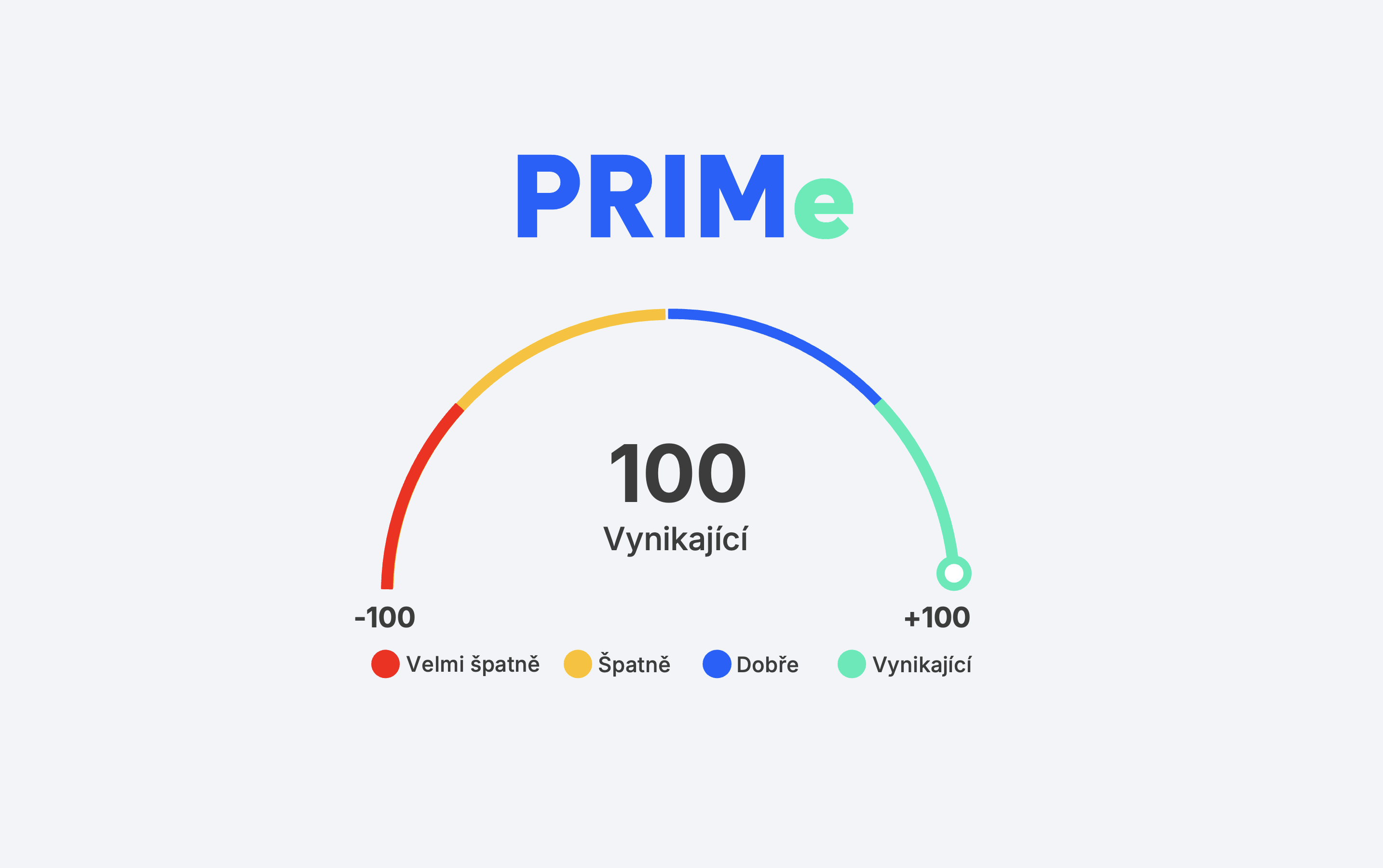
It was created in accordance with the Barcelona Principles 3.0 and 4.0 and evaluates each output based on four factors, resulting in a single clear score from –100 to +100.
“We wanted a tool that helps distinguish outputs with real benefits from media noise – and makes this data accessible to everyone who needs it for strategic decision-making,” says Zdeněk Jodas, Sales Director of Mediaboard.
The Four Pillars of PRIMe: What Really Lies Behind the Score?
PRIMe uses its own AI model, which evaluates each output based on these key factors:
1. Relevance
We monitor how closely the article relates to your brand. Whether it addresses key topics, contains mentions of products or quotes from your representatives, and whether it is a main topic or just a marginal mention.
2. Sentiment
We analyze the overall tone of the message – whether it appears positive, neutral, or negative. We consider the language of the article, emotions, evaluative expressions, and reader feedback on social media.
3. Reach
It's not just about how many people could see the article, but also where and how it appeared. PRIMe monitors, for example, front pages, prime time, or the credibility of the given media.
4. Content Quality
We distinguish between a press release transcript and deeper journalistic processing – such as analysis, interviews, or commentary that develops the topic and brings value to the brand.
One Number Everyone Understands
The result is one comprehensive score that simplifies evaluation while maintaining depth.
Instead of lengthy explanations or Excel spreadsheets, one number is enough, which:
Helps PR teams quickly evaluate the impact of individual outputs,
Offers management a clear argument for why communication works – or doesn't.
And provides marketing with clear data for campaign management and improves collaboration with the PR department.
Unlike traditional reports, PRIMe is understandable across the entire company, without the need for PR knowledge.
“Our goal is to create a community of people who are eager to advance public communication – from classic press releases to strategic, digitally savvy, and empathetic PR.” – Tereza Svobodová, Mediaboard
Automatic Evaluation Using AI
PRIMe is not just a methodology, but a tool with its own evaluation system.
Each article is evaluated by our AI model, which gradually learns based on your adjustments – the more you work with the outputs, the more accurately the metric functions in the future.
Thanks to this, you can evaluate in real-time, without manual work. Whether you're dealing with a small campaign or monthly reporting for dozens of brands.
Proven in Practice, Designed by Experts
The development of PRIMe involved experts from PR, data analytics, and the Association of Strategic Communication and Public Relations (ASCOPA). We also tested the metric in real projects – for example, with IKEA, which also participated in its development.
Thanks to this, PRIMe can handle real situations you know from everyday practice – from crisis communication to reporting results to management.
Finally, a Metric That Reflects the Reality of PR
PRIMe considers what truly matters in the media:
the strength of the message,
the method of processing,
the context of the output,
and its impact on brand perception.
And most importantly – it helps demonstrate the value of your work with data that finally makes sense.